
Bottle-cap moulding · Yuyao, Zhejiang · PP
Eight blending stations became one inspection round
Before and after
Every figure below comes from the customer's own count three months after the machines went in. None of it is an estimate.
| Measure | Before | After |
|---|---|---|
| Colour blending labour | 8 people, two shifts | 1 inspector |
| Monthly colour-deviation rejects | 3.2% | 0.02% |
| Annual labour cost | — | over RMB 300,000 saved |
| Payback period | — | 5 months |
| Position with their own customers | Shopped on price | “They now specify our material” |
Eight people down to one does not mean seven people lost their jobs. What those eight did was blend material: weigh the pigment, tip in the resin, mix, scrape out the drum. The machine took that work. The one person who stayed does changeover, purging and inspection — the job itself changed. The customer moved the others onto different operations.
How it happened
The difficulty in bottle caps is not technical, it is volume. An order runs to several million pieces, and if the colour drifts the whole batch comes back. The customer's answer had been more people: eight operators across two shifts doing nothing but blending colour, one person covering two machines, relying on an experienced hand to get the pigment evenly through the resin.
The trouble is that a practised hand is not a constant. The same recipe came out differently on the morning and the night shift, and differently from the same person before and after lunch. That is where the 3.2% monthly reject rate came from — three points sounds small until you apply it to several million pieces.
What the retrofit changed was narrow: hand blending was replaced by dosing to a set recipe. The pigment is metered by the volume of the gear cavity, so what you set is what you get, regardless of who is on shift. Reviewed three months in, the reject rate was down to 0.02%, labour saving was over RMB 300,000 a year, and the machines had paid for themselves in five months.
What the customer said afterwards is more interesting than the figures: their own customers now ask for their material by name. Consistent colour had turned into something they could sell.
Our customers now specify our material.
What makes that worth quoting: colour consistency started out as a cost line on their books and ended up as leverage with their own buyers.
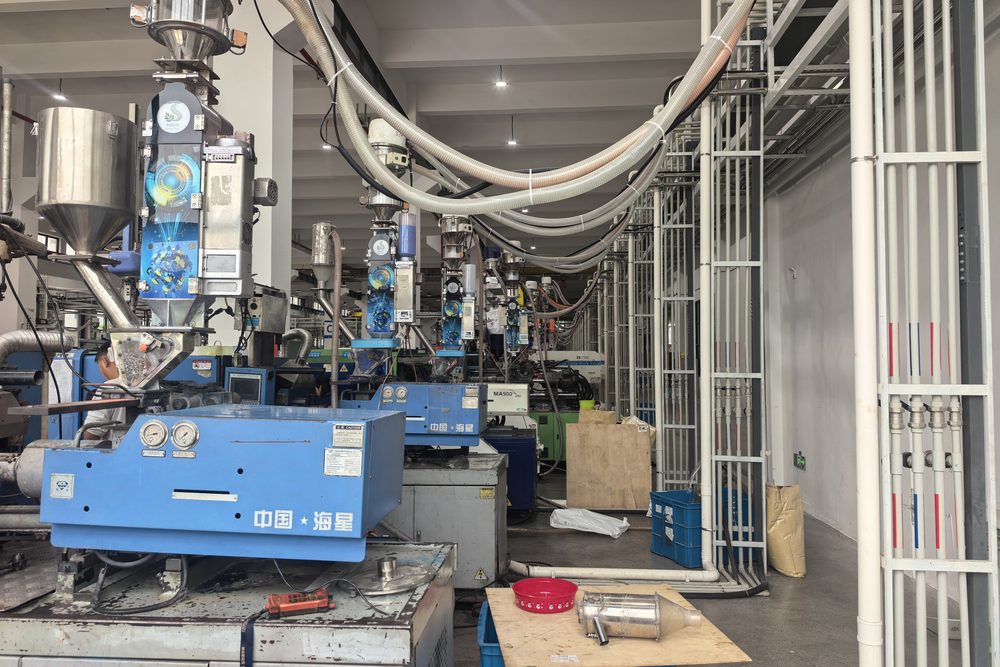
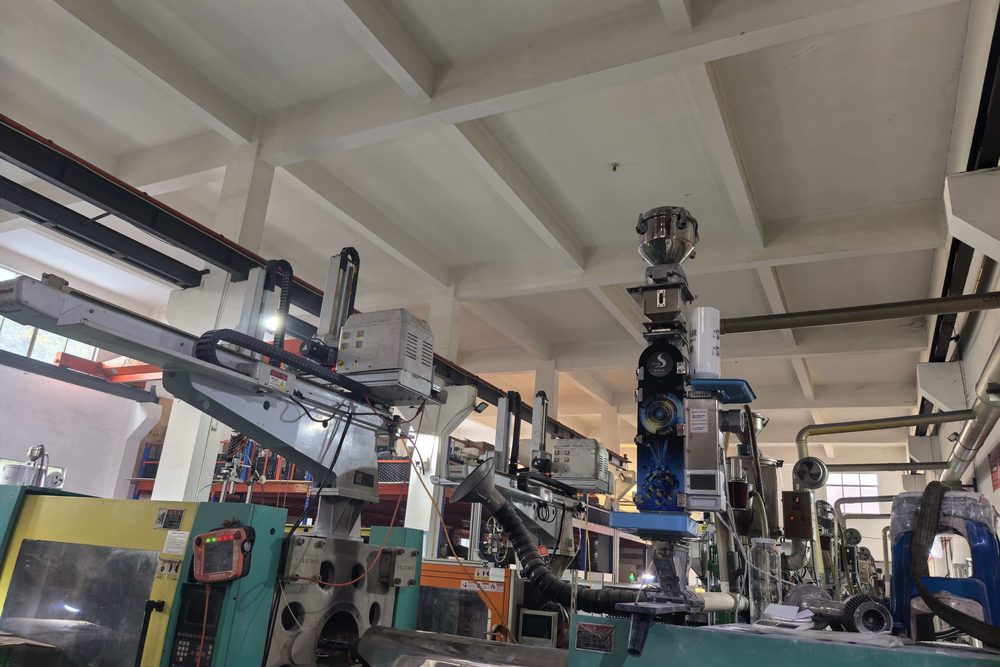
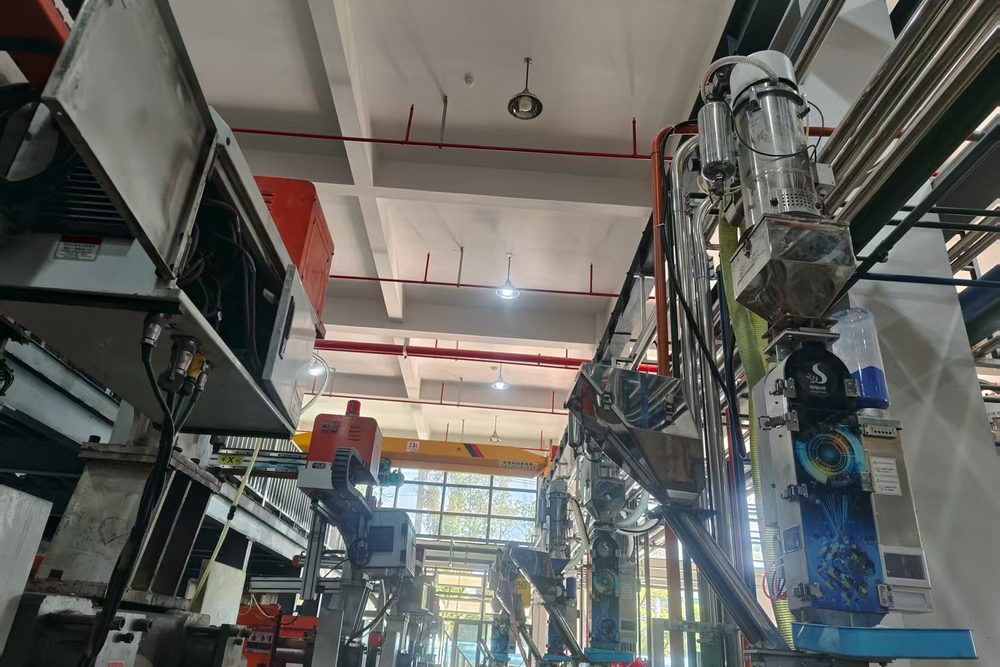
Photographs from the floor
Photographs from customer plants. At their request these show the equipment and the work station only — no company names, signage or anything that identifies the site.
Who this case applies to
Close enough to read across directly
- Moulders running PP or similar low-temperature resins
- One product in high volume, where a colour drift means the whole batch comes back
- Colour currently blended by hand, by several people across shifts
- Customers with a hard requirement on colour consistency (food and personal-care packaging)
Different enough that you should not read the figures across
- Short runs with very frequent colour changes — the payback arithmetic is different
- Running ABS, PC or other high-temperature resins → see the high-temperature models
- More than 70 kg an hour on a single machine → see the Large Standard model
- Already dosing masterbatch mechanically — your saving is in material cost, not labour
Do not treat somebody else’s numbers as your forecast. Labour, reject rate and payback all depend heavily on how many moulding machines you run, how often you change colour, and how the work is staffed today. The same machine in two different plants can save amounts that differ several times over. To get your own figure, tell us your machine count, your shift pattern and how often you change colour — or just send material for a trial.
Want to know how it runs on your material?
Somebody else’s case is a reference point; the data from your own material is what you can decide on. Send it to us for a trial run — there is no charge for this.
For a trial we need the resin grade, the pigment reference and the let-down ratio. Results normally come back within 3 working days.